Hiking Ice Lakes Basin: One of Colorado’s Most Incredible Alpine Hikes
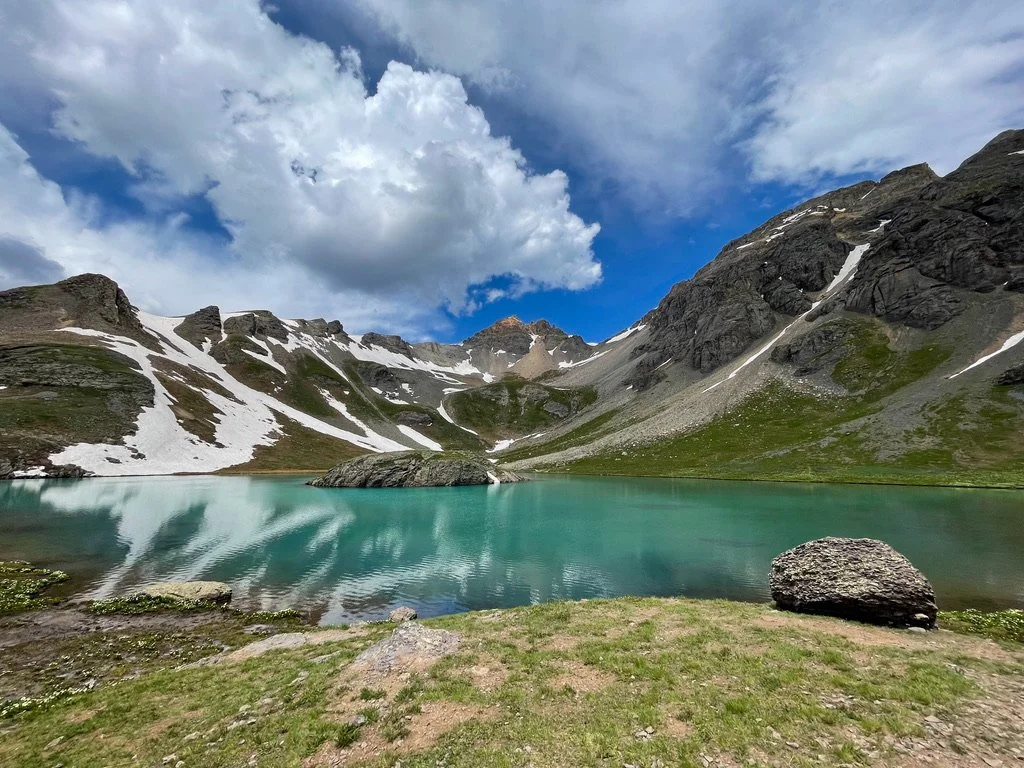
There are few things I love more than spending a day somewhere that makes you forget to check your phone.
Last summer, I found one of those places in southwestern Colorado, hiking into the San Juan Mountains toward Ice Lakes Basin. The trail climbs through forests and wildflower-filled meadows before opening into a high alpine landscape of snow, rocky peaks, and bright turquoise lakes.
I had seen photos of Ice Lake before the hike, but the experience of actually getting there was much better than I expected. The lake is beautiful, but what made this hike stand out to me was everything that came before it.
Into the San Juan Mountains
The Ice Lakes Trail begins near Silverton, Colorado, and starts with a steady climb through the forest. The sound of the creek follows you for much of the lower portion of the trail, and as you gain elevation, the landscape slowly begins to change.
By the time I reached the meadows, the trees had started to thin and wildflowers were everywhere. Purple, yellow, white, and blue flowers covered the hillsides, with streams of snowmelt running through the greenery.
It was one of those hikes where I kept stopping to take photos because every section looked a little different.
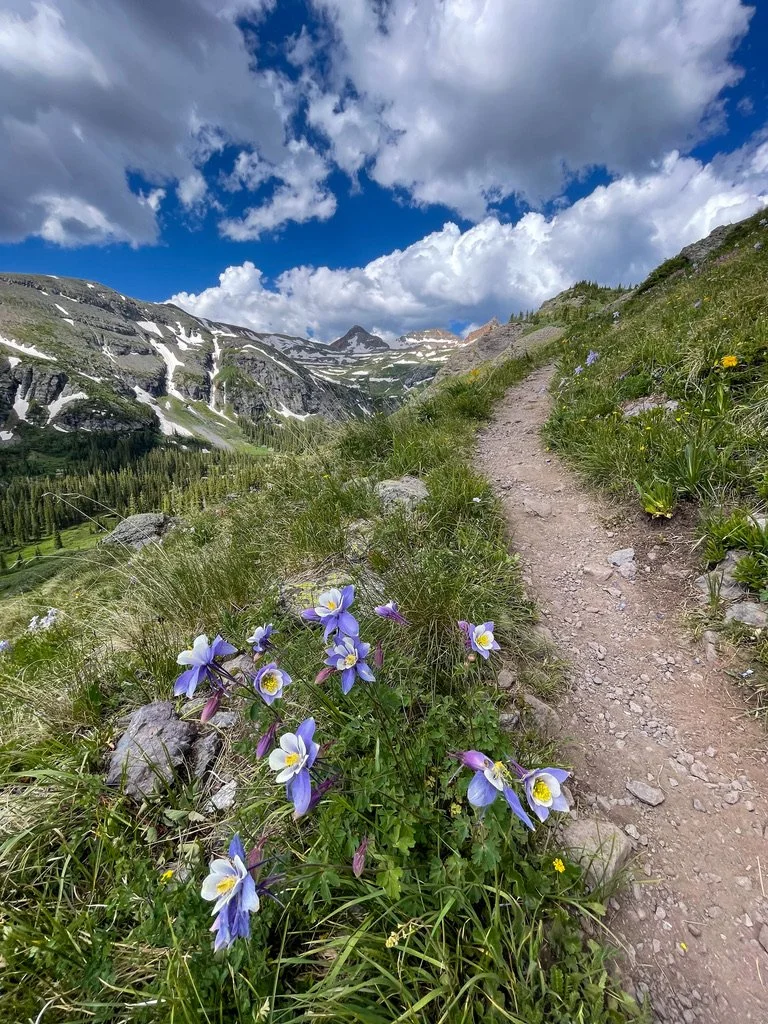
Wildflowers in the High Country
One of my favorite parts of the Ice Lakes Basin hike was how much the landscape changed as we climbed. After starting in the forest, the trail eventually opened into wide alpine meadows filled with wildflowers. Purple blooms covered the hillsides, growing among the rocks and alongside the streams created by the melting snow above.
There was something especially beautiful about seeing the flowers in full bloom with snow still covering the surrounding peaks. It felt like two seasons meeting in the same landscape. I stopped more than once to take in the contrast and photograph the little details along the trail before continuing higher into the mountains.
These were the moments that made the hike feel like more than just a climb to reach the lake. The scenery along the way was constantly changing, and sometimes the smaller details were just as memorable as the views ahead..
As the trail continued upward, the scenery became more rugged. The higher we climbed, the more snow remained on the surrounding mountains. There was something really beautiful about seeing summer wildflowers growing alongside patches of snow and ice.
Eventually, the trees disappeared completely and the trail entered the alpine zone. The views opened up in every direction, and the mountains felt much closer.
This is also where the hike starts to feel more challenging. Ice Lake sits at more than 12,000 feet, and the trail gains roughly 2,500 feet of elevation over about seven miles round trip. The altitude definitely adds another element to the climb, especially if you're coming from sea level.
But there was plenty to distract me from how tired I was getting.
Ice Lake
After all the climbing, the trail finally opens up to Ice Lake.
And yes, the water really is that color.
The lake was an incredible shade of turquoise, surrounded by steep mountain walls and lingering snow. A small rocky island sits in the middle of the water, and depending on the light, the lake seemed to change from bright blue to green.
I spent some time walking around the basin and taking in the different views. From every angle, there was something different to see: the lake below, snow-covered slopes above it, wildflowers along the trail, and jagged peaks surrounding everything.
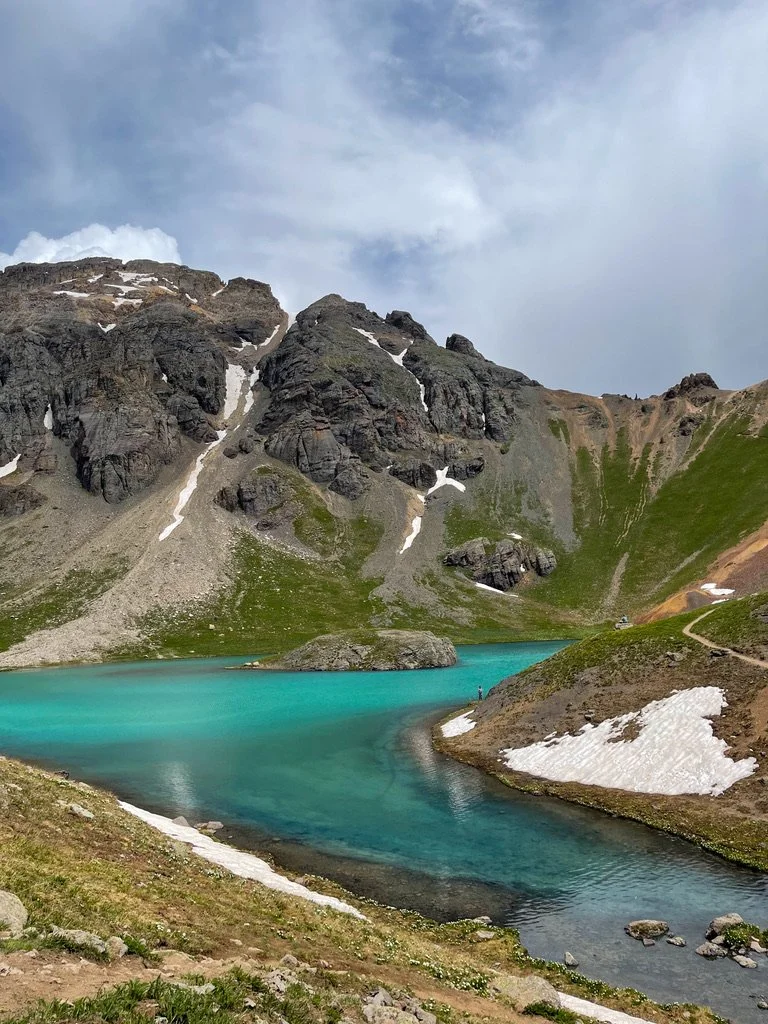
Ice Lake
After all the climbing, the trail finally opens up to Ice Lake.
And yes, the water really is that color.
The lake was an incredible shade of turquoise, surrounded by steep mountain walls, lingering snow, and scattered wildflowers. A small rocky island sits near the center of the lake, adding another layer to an already dramatic landscape.
I spent some time walking around the basin and taking in the different views. From one side, you could see the lake framed by the mountains. From another, the trail continued along the shoreline toward the upper basin, with snow still covering parts of the surrounding slopes.
The weather was constantly shifting while I was there, with clouds moving over the peaks and sunlight changing the color of the water. It made the lake look a little different every time I turned around.
After the climb to get there, it was a good place to slow down for a while before continuing on through the basin.
What I remember most, though, isn't just the color of the lake. It's the contrast.
The bright water against the gray rock. Snow still sitting on the mountains in the middle of summer. Wildflowers growing across the hillsides. Clouds moving quickly through the peaks.
It felt like several different landscapes had come together in one place.
The Beauty Along the Way
One of the things I loved most about Ice Lakes Basin is that the lake isn't the only reason to make the hike.
The trail itself is constantly changing. You start beneath tall trees, move through green meadows and wildflowers, cross streams fed by snowmelt, and eventually find yourself surrounded by completely exposed alpine terrain.
The San Juan Mountains are also some of the most dramatic mountains I've hiked through in Colorado. The peaks are rugged and steep, and the landscape feels much more remote once you're above treeline.
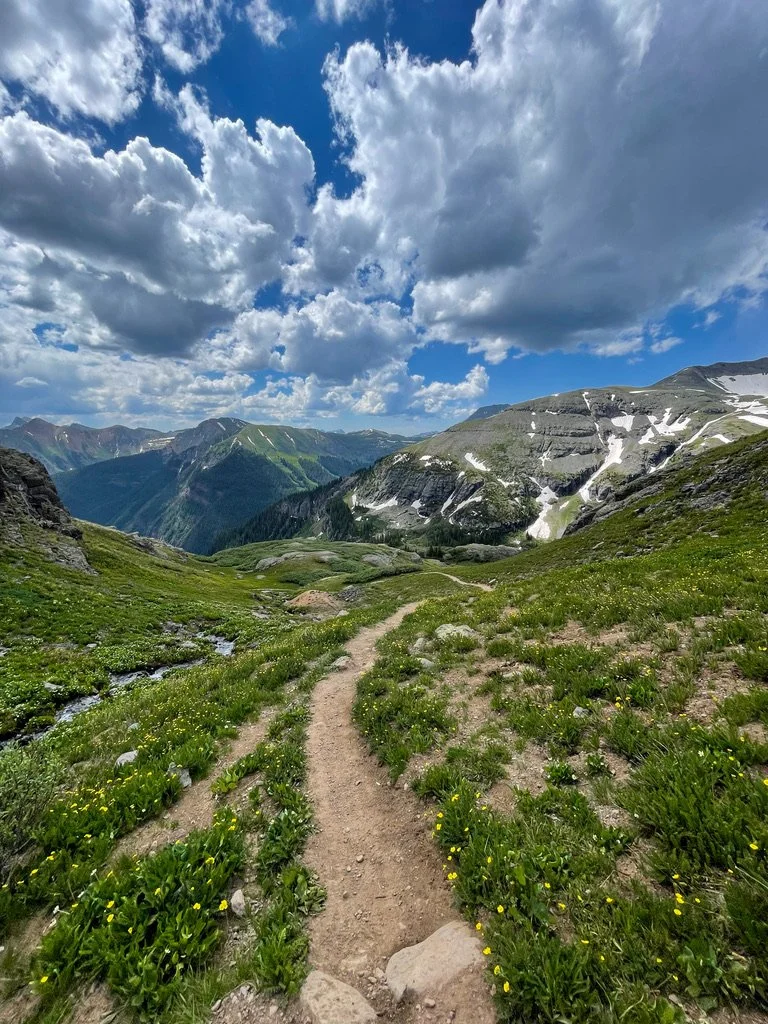
Above the Treeline
Once you leave the lake behind, the trail continues through a completely different side of the basin. The trees are long gone, replaced by open hillsides covered in wildflowers, small streams, and sweeping views of the mountains in the distance.
This was one of my favorite sections of the hike because you can really see how high you've climbed. Looking back along the trail, the mountains stretch out in every direction, with snow still tucked into the slopes and clouds moving across the peaks.
The trail felt small against the landscape, winding through the greenery as it continued higher into the mountains. After spending so much of the hike surrounded by trees and rock, having this much open space made the San Juan Mountains feel even bigger.
There were moments when I would look around and realize how far the landscape had changed from where I started.
That's one of my favorite parts of hiking. You don't just arrive somewhere beautiful. You get to watch the landscape transform as you make your way there.
What to Know Before You Go
Ice Lakes Basin is considered a difficult hike, mostly because of the elevation gain, steep sections, and high altitude. The trail reaches above 12,000 feet, so even hikers who are comfortable with longer distances should be prepared for the elevation to make things feel harder.
Summer is a beautiful time to visit because of the wildflowers, although snow can remain at higher elevations well into the season. Trail conditions can vary, so it's worth checking conditions before you go.
I'd recommend starting early, bringing plenty of water, wearing shoes with good traction, and packing layers. Once you're above treeline, you're exposed to the weather, and Colorado's afternoon thunderstorms can develop quickly.
And give yourself time.
This isn't a hike I'd want to rush through just to reach the lake and turn around. There are too many beautiful sections along the way.
Looking Back
I've been lucky enough to hike in some incredible places, and Ice Lakes Basin is one that has stayed with me.
Maybe it's because of the lake. Maybe it's the wildflowers and snow existing side by side. Or maybe it's simply the feeling of being completely surrounded by mountains after spending the day climbing toward them.
Whatever the reason, it was one of those days that reminded me why I love exploring on foot.
You start at the trailhead not knowing exactly what the day will look like, and a few hours later you're standing beside a turquoise alpine lake at 12,000 feet, wondering how a place like this exists.
For me, that's the best part of traveling.
Not just seeing somewhere new, but getting there slowly enough to actually experience it.
And Ice Lakes Basin is a pretty unforgettable way to do that.
By the time I reached the alpine basin, there were almost no trees left. The terrain became more rocky and exposed, with snowfields scattered across the slopes and jagged peaks surrounding the trail.
Ice Lakes Basin is a strenuous hike, with roughly seven miles of trail and significant elevation gain. The lake sits at more than 12,000 feet, so the altitude is something to take seriously, especially if you're coming from lower elevation.
But the scenery makes it easy to forget about the climb.
Eventually, the trail opens up and Ice Lake comes into view.
The first thing that caught my attention was the color.
The water was an intense blue-green that almost didn't look real against the gray rock and patches of snow surrounding it. A small rocky island sits near the center of the lake, with the mountains rising behind it.
I walked around the shoreline for a while, taking in the different views. The lake looked completely different depending on where I stood. From one side, the water stretched out beneath the mountains. From another, the trail followed the edge of the basin with snow and wildflowers scattered across the hillsides.
